We started by asking why good regulations are in place to protect water quality but compliance with them is often poor. For example, the WFD, a European directive that has been in force since back in 2000. Originally, the aim was to achieve its objectives by 2015. There have been two postponements and the deadline is now 2027. Why will the Netherlands not be able to meet this new deadline either?
Professor Sander Meijerink attributes this, firstly, to government control, which is too voluntary and lacking in obligation. The Council for the Environment and Infrastructure mentioned this point in an advisory report recently too. Secondly, Meijerink believes there is a lack of policy coordination between the various sectors.
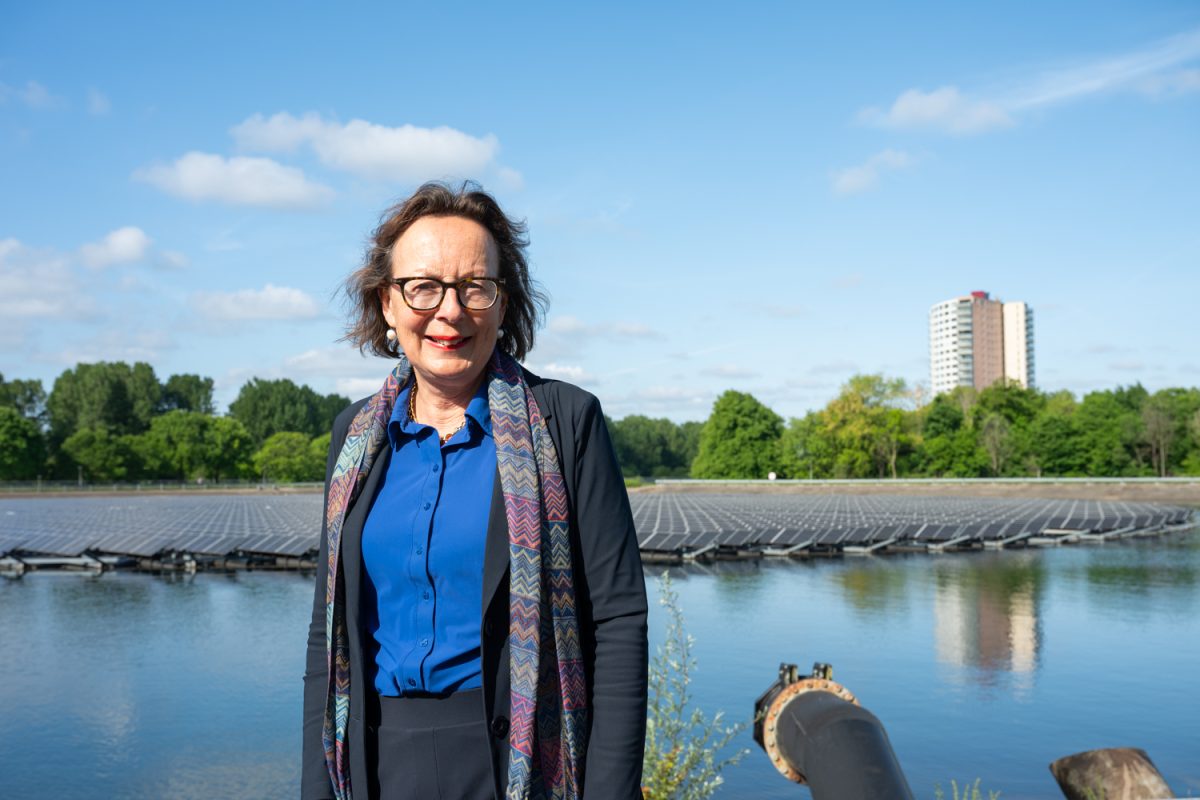
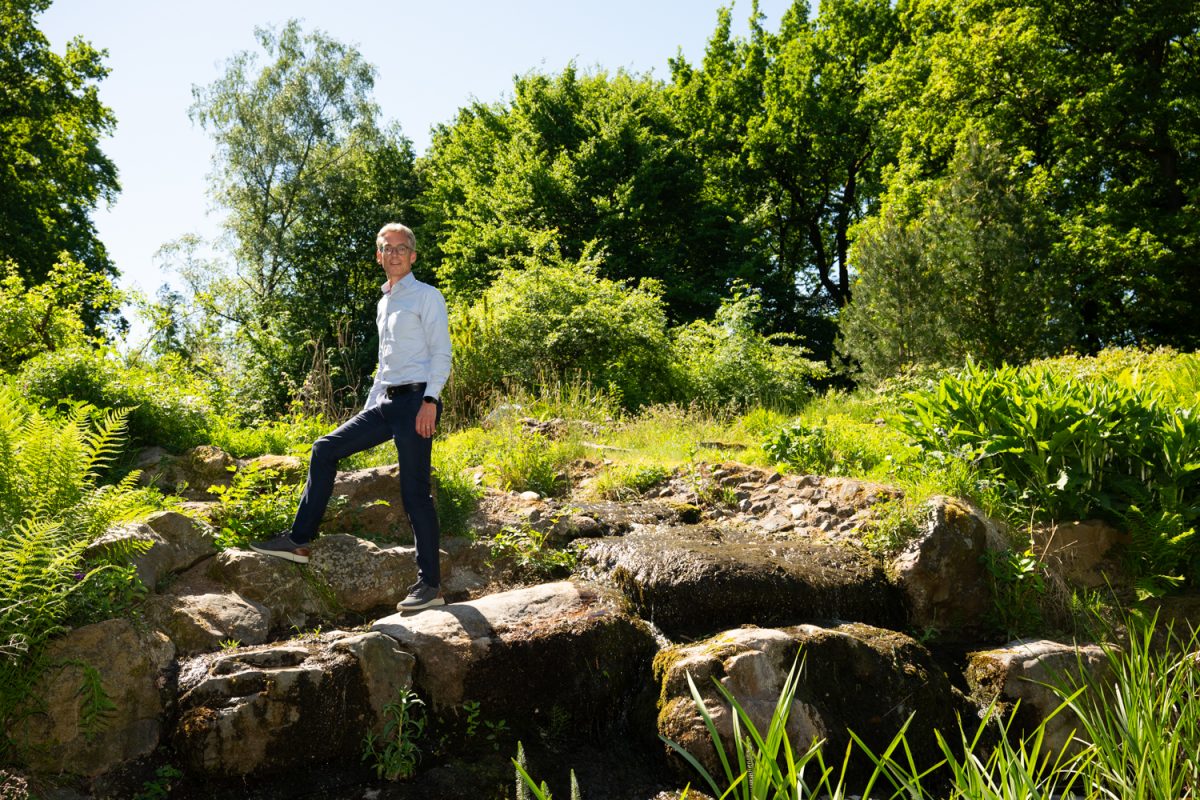
Sander Meijerink, Professor of Planning at Radboud University (Photo: Eelkje Colmjon, Eelk.nl)
Mandatory and current
As an example of aspects the government could make more mandatory, Meijerink mentions the registration of water use. Irrigation, for example: watering agricultural crops. “Currently, there is no systematic registration of water extractions, from surface water and groundwater,” Meijerink says. “Despite there being periods of water scarcity. This could be made mandatory for users, like farmers, so we gain a better insight into water consumption and are able to manage water use more effectively during times of water scarcity.”
He also mentions out-of-date permits for discharging substances. “Once they have been updated, it may be found that fewer discharges are permitted in some cases. It will be difficult to achieve the WFD objectives until this happens.”
Meijerink stresses that the WFD objectives also include the ecological quality of waterways. For example, giving waterways more space so they are able to meander again. “This is possible in many places; in others, it is not.” He notes that the government is hesitant to expropriate agricultural land. It does not show the same hesitance when building roads, for example. “This would help make it easier to achieve a number of the WFD objectives.”
Limited coordination
According to Meijerink, the second reason why water quality objectives are not being met, despite the sound policy in place, is the lack of policy coordination between the various sectors. “As we know, the WFD focuses on water and water quality. But the achievability of its objectives also depends on what is happening in other policy areas. Especially agricultural policy.” He mentions fertiliser regulations, pesticide use, nitrogen policy and phosphate standards.
The National Programme for Rural Areas had actually made a good start with this coordination, Meijerink adds. Provinces, water boards and other parties in the programme had worked hard for a number of years to achieve a more integrated, coordinated approach to water quality and agricultural issues. “Unfortunately, this all stopped with the inauguration of the Schoof cabinet. Very disappointing,” says the Professor of Planning.
The same is happening at European level, Meijerink says. “The Common Agricultural Policy emphasises food security without always properly considering consequences for the environment. The coordination between agriculture and drinking water quality could actually be improved across the board.”
Are the right regulations in place?
But are the policies, rules, guidelines and laws that are in place to protect water quality actually the right policies, rules, guidelines and laws or could they be improved? For example, the WFD applies the one-out-all-out principle: a surface water body must meet all the requirements to be deemed in compliance with the directive. “That’s a very high bar,” Meijerink says. “The resulting picture is sometimes a little distorted because of this. Significant progress may have been achieved on almost every aspect, but a country is deemed to be non-compliant if its fails to meet just one aspect. That’s not exactly motivating.”
In the Netherlands, the WFD sets no fewer than 100,000 chemical and ecological quality objectives for our surface water and groundwater. The Netherlands is currently meeting approximately 80% of these objectives but none of the approximately 750 Dutch surface water bodies has achieved ‘good’ status yet,” Meijerink explains. This will only be possible when all the individual ecological and chemical parameters have been assessed as ‘good’.
Reputation
Water quality in the Netherlands is relatively poor compared to other EU countries. Meijerink believes this is due to the densely-populated nature of our country; agriculture here is highly intensive and there is a lot of industry. “It’s difficult to achieve water quality objectives like this when you’ve got so many people living on such a small piece of land.”
But none of the countries will meet the 2027 deadline. “I think this is particularly painful for the Netherlands,” Meijerink says. “Because we have a certain reputation in the field of water management. And we always lead the way in the development of international agreements and guidelines.”
Motivated by our own interests in part: the Netherlands is located downstream and dependent on what happens in neighbouring countries. “We are hoping that international policy will pave the way for improved water quality, more water or better protection against flooding. That’s why the Netherlands often initiates agreements like these. But it’s a different story when it comes to implementing this policy on our own soil.”
Workarounds
This situation is not limited to the WFD. Meijerink also mentions fish migration in the Rhine, for which the Haringvliet had to be partially closed. Also, restoration of the ecology alongside the Western Scheldt, for which the Hedwigepolder had to be sacrificed. “It took an incredibly long time before this actually happened. Which was only when the government couldn’t get out of it any more and a deadlock had been reached from a legal point of view. Initially, endless workarounds were devised to try to make it happen. They have been necessary for both nitrogen policy and the WFD.”
Why this is? “We don’t want to be affected by our neighbours’ contamination, but it all gets much more difficult when you have to take expensive or difficult decisions and disappoint people,” he says. “That’s something we often prefer to avoid.” He cites livestock reduction and the effective monitoring of wastewater discharges by companies as examples.
No urgency
Is water quality actually an important issue here in the Netherlands? “That’s very much the question,” the professor answers. “Not really. I don’t think the urgency of the issue is being seen and recognised sufficiently yet.”
Meijerink mentions again the poor implementation of the WFD. “People are accepting the repeated failure to meet the objectives.” However, he also says: “The directive has put water quality on the agenda. If it hadn’t, we might have done even less. But water safety, the risk of flooding, has been higher on the agenda for years now.”
Clean water
Meijerink observes that people still think we have ‘got it right’ here in the Netherlands. Naturally, the tap water in most countries is not as clean as it is here. “The thinking is: we’ll manage to purify the harmful substances. And that has been possible to date. But it’s getting more and more difficult and expensive to do.”
However, Meijerink does say that there are some things that are going well here: “Many other European countries lack the financial resources they need to be able to achieve the water management objectives. That’s less of a problem here in the Netherlands because we have a water board system, with water boards that also charge their own levies.”
International agreements
The second subject that RIWA-Meuse presented to the professor is international cooperation in the Meuse water basin. Given the changing climate, we are experiencing more extensive, extreme periods of drought in the Netherlands, Flanders, Wallonia, Germany and France. This is resulting in a shortage of water in rivers, including the Meuse, more often and for longer periods of time. Quality then decreases because harmful and difficult-to-degrade pollutants are diluted less. The risk of tension and possible water-related conflicts water could increase too.
So, it is important for the various countries to cooperate in respect of the use of Meuse water. Good cooperation exists between Flanders and the Netherlands about water availability. But it would be good to extend this to the entire water basin: closer cooperation with Wallonia, France and Germany on this theme. “That would certainly make sense in light of current events,” Meijerink says. “You want to retain the water in the upstream parts longer, so it can be used in periods of drought.”
Meuse Discharge Treaty
Flanders shares applications for wastewater discharge permits that could impact water quality across the border with the water manager in the Netherlands, so both can safeguard each other’s interests. The Meuse Discharge Treaty, which relates to the distribution of Meuse water between the Netherlands and Flanders, has been in force since 1996.
The treaty has been successful, Meijerink says: if an urgent situation arises, both countries discuss possible conservation measures. “Water scarcity was already on the agenda in the 1990s and agreements were made about it back then. However, decades of negotiations were needed to get to this point. Flanders was able to deepen the waterway in the Western Scheldt in return. We still don’t have a treaty like this for the Rhine.”
Upstream and downstream
But why are there no agreements with other countries, other than the treaty between Flanders and the Netherlands, about the use and distribution of Meuse water? This is due in part to the bifurcation of the river between the Netherlands and Flanders at Liège. Part of the Meuse flows via the Albert Canal to Flanders, part via the Meuse and Juliana Canal to the Netherlands and part is shared between the Netherlands and Flanders via the Meuse border. At this point, water is distributed in line with the agreements in place. This is not the case in other countries in the Meuse region; the river flows from one country to the other. This makes agreements more difficult because more water for one country can mean less for another.
The difference in interests between the upstream and downstream countries and regions also plays a role, Meijerink explains. “The Netherlands and Flanders are downstream, so it is logical for them to be very interested in agreements like this. This applies less to the upstream countries.”
Legal rankings
Besides agreements on the distribution of Meuse water between Flanders and the Netherlands, agreements are also in place about the distribution of water within these areas in the event of water scarcity. Specifically, legal rankings for the distribution between the various sectors: drinking water, shipping, industry, agriculture, recreation, nature and energy. In Flanders, this is called the assessment framework for priority water use; in the Netherlands, it is called the priority sequence.
The type of usage that is most important varies from one country to another, Meijerink explains. “A ranking for the entire Meuse or Europe as a whole is pointless because each country has different priorities for water use.” For example, in the Netherlands, dykes and drinking water are important; in Flanders, drinking water, industry and shipping; in Wallonia, shipping; and in France, the cooling of nuclear power plants, agriculture and recreational shipping.
Joint Drought Committee
Both the Netherlands and Flanders have a Drought Committee, which comes into action during periods of low river flows and (imminent) water shortages. Meijerink welcomes the idea of a joint Drought Committee for all the countries in the Meuse basin. “I think that would be very useful.” The various countries and regions in the International Meuse Committee have been keeping each other informed for several years now. Meijerink believes that greater coordination and the identification of possibilities for mutual support would be a good next step.
Meijerink believes the International Meuse Committee is best placed to foster more international agreements on the use of Meuse water. “That seems better to me than creating yet another new organisation. All the countries in the Meuse river basin are already members and agreements of this nature align well with the goal of achieving integrated river basin management.”
Text: Thessa Lageman, Onder Woorden
Translation: KERN Rotterdam
This interview is published in the RIWA Annual Report 2024 The Meuse