



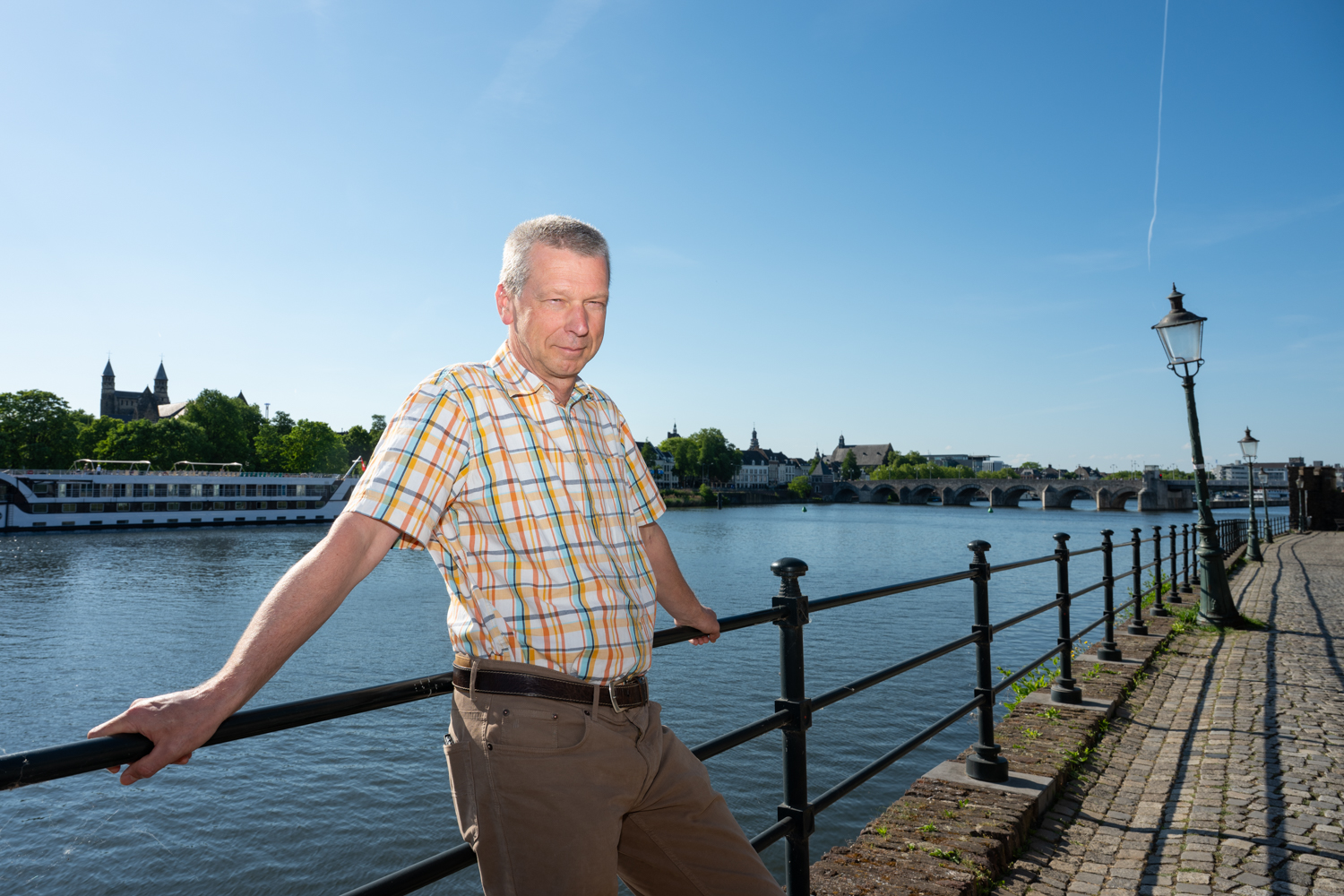
Interview Roel Kwanten, coordinator of emerging substances and water quality at Rijkswaterstaat South Netherlands: “Who knows if the discharge information that companies provide is actually correct?”
To improve water quality, the Netherlands needs a better understanding of the origins of wastewater discharges. Indirect discharges, via the sewage system, in particular are poorly documented. Roel Kwanten: "It would be good to be able to take samples at large companies on a monthly basis."
The majority of the hundreds of thousands of companies in the Netherlands discharge their wastewater into municipal sewers. These are called indirect discharges. A small number of companies discharge straight into rivers, canals, ditches, streams and other surface waters: these are direct discharges. Roel Kwanten, coordinator of upcoming substances and water quality, who has worked at Rijkswaterstaat since 1990, estimates that there are approximately 2,000 such companies.
Indirect discharges ultimately end up in surface water too, via wastewater treatment plants. This sounds and is better than discharges that go straight into the river, which was the case until about 50 years ago, Kwanten says. “However, the treatment plants are often unable to remove all the harmful substances from the wastewater. Indirect discharges aren’t monitored as frequently either.” Kwanten is also an ambassador for indirect discharges. In this role, he tries to connect people from different organisations, to raise awareness of the issue.
Direct and indirect discharges
Companies that discharge substances must apply for a permit, although a notification is sometimes sufficient, depending on the business category. Roel Kwanten tries to explain how this works in the Netherlands – it’s not simple: “Rijkswaterstaat and the water boards are responsible for direct discharges. Rijkswaterstaat issues permits for discharges into national waters – the sea, rivers like the Meuse and major canals – and the water boards for regional waters, such as small rivers, ditches and streams.”
The municipalities and provinces are responsible for indirect discharges. Kwanten: “The municipalities issue permits for smaller companies, while the provinces do the same for large and complex companies. But because they usually lack the expertise they need in-house, they have delegated this responsibility to the environmental services.”
There are 28 regional environmental services (government agencies that are responsible for regional permitting, supervision and enforcement in respect of the environment and the physical living environment). “In many cases, the environmental services know more about emissions via the air or soil, or about noise emissions, than about water,” Kwanten explains. “That’s why companies usually approach the water board in the purification zone applicable to them.”
What is the actual situation?
When applying for a permit, companies must clearly state what they discharge into the sewage system. Kwanten: “If a company says: we don’t discharge PFAS or other problematic substances, the assumption is that it doesn’t. But how do we know for sure? Especially when companies themselves sometimes don’t. Measurements don’t lie and enable you to discover things sometimes too.”
For example, a few years ago, the House of Representatives asked the Minister of Infrastructure and Water Management whether any companies were discharging PFAS into national waters. Rijkwaterstaat’s permits showed that no companies at all were discharging PFAS. “Rijkswaterstaat then started carrying out measurements at companies we suspected were discharging PFAS,” Kwanten says. “And we found five that were. Without the measurements, we wouldn’t have known. The same applies to indirect discharges.”
No budget
Kwanten says that just a fraction of the hundreds of thousands of companies that discharge into the sewage system – the indirect discharges – are subject to occasional inspections at the current time. He does not know exactly how often these inspections happen. “But I do understand from environmental agencies that they generally only carry out inspections if they suspect an illegal discharge.”
Kwanten says that the inspection frequency depends on the type of wastewater. “There’s no need to inspect a local bakery. But I think samples should be taken from large companies at least once a month.”
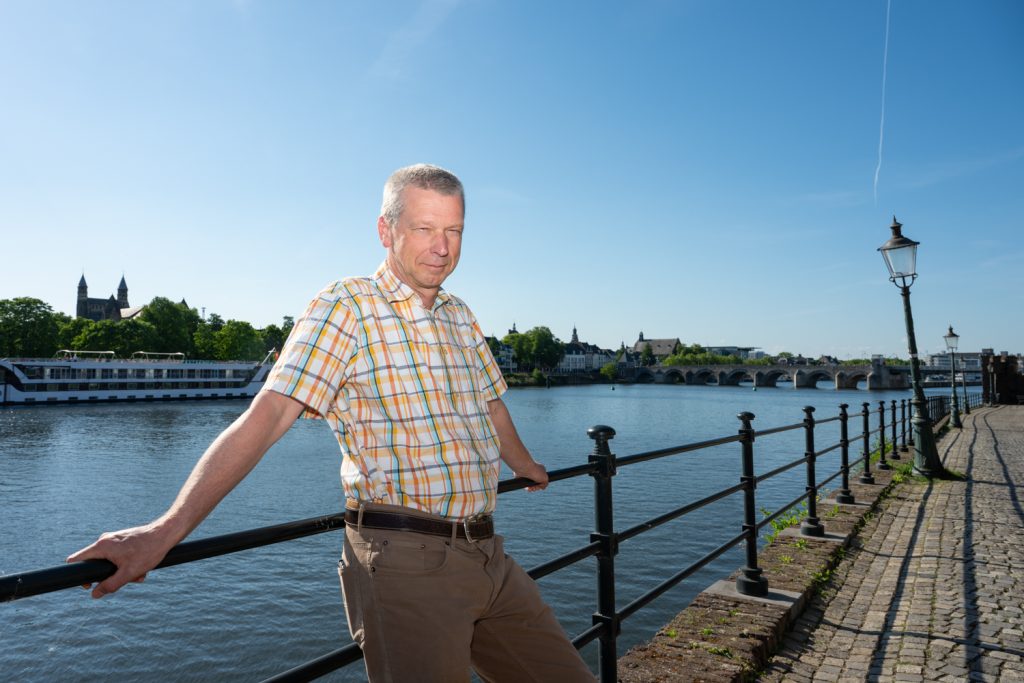
Roel Kwanten, coordinator of upcoming substances and water quality at Rijkswaterstaat South Netherlands (Photo: Eelkje Colmjon, Eelk.nl)
Kwanten, as a representative of the SMWK, a partnership of drinking water companies, water boards, Rijkswaterstaat and the Ministry of Infrastructure and Water Management, has been in discussions with environmental agencies in recent years. “They are aware that they play a role in the huge puzzle of where substances come from,” he says. “However, their mandate is to consult with companies that want to obtain permits. They don’t have the budget or capacity for inspections.”
Forgotten inspections
This approach – provinces and municipalities consult environmental agencies, which in turn consult the water boards – has been in place since 2009. This is when the Dutch Water Act came into effect; this was preceded by the Dutch Pollution of Surface Waters Act. Before this, the water boards were the competent authority responsible for issuing permits to medium and large companies. “The idea was for the water boards to manage wastewater treatment plants too; they wanted to monitor what kind of wastewater was being discharged into them,” Kwanten explains.
Back then, the water boards regularly visited companies to inspect compliance with the permit conditions, the Rijkswaterstaat employee says. The water boards used to have their own laboratories, but this is no longer the case. “It was forgotten to include inspections in the Dutch Environment Act,” Kwanten says. “Well, I say ‘forgotten’. They weren’t included in the remit.” He feels this is “a bad thing.” How this was possible? “Well, companies were allowed to arrange many things themselves back then. A lot of trust was put in them.”
Emerging substances
Samples from organisations like the SMWK show that the water in our rivers, canals and streams regularly, or even consistently, exceeds various surface water and drinking water standards. “We often don’t know where these substances come from,” Kwanten says. “It’s like looking for a needle in a haystack because measurements aren’t being taken at the companies at the locations where the substances are being discharged.” More and more of them are so-called emerging substances. These substances are not subject to any legal standards yet; there are a lot of them and it is often unclear how harmful they are.
Neighbouring countries
The permitting process in neighbouring countries is less complex than it is here in the Netherlands, says Kwanten, who is Flemish and lives in Flanders. “In neighbouring countries, just one competent authority usually issues environmental permits: the municipality or province. Various government agencies advise the competent authority, each based on their particular areas of expertise. An environmental inspectorate usually carries out discharge inspections.”
In Flanders, the Flemish Environment Agency advises municipalities and provinces on issuing environmental permits. “Wastewater monitoring inspections are regularly carried out here. So, there’s more control over indirect discharges than in the Netherlands; the same applies in Wallonia, France and Germany.”
Discharges on the internet
Unlike the Netherlands, the results of inspections in Flanders have been published online for a few years now. So, citizens are able to see exactly what companies have discharged. “The idea is that citizens have the right to see these figures because they pay the government to inspect companies.”
So, would it be a good idea to look at how neighbouring countries are doing this? Kwanten: “It’s not rocket science; it just needs to be organised. It’s about freeing up capacity and budget to inspect indirect discharges more.”
Political will
Does the fact that neighbouring countries are increasing their inspections mean that fewer harmful substances are entering the Meuse via indirect discharges from the south? Unfortunately, Kwanten’s answer is: “Not necessarily.” It depends very much on the conditions in the permit, he explains. “Sometimes, more permits are issued than we would like, or conditions aren’t strict enough. There are times when we know a company is discharging certain substances, but they haven’t been included in the permit.”
Kwanten also observes that the available capacity, the number of people freed up for inspections and laboratory analysis, varies from one region to another. “There’s sufficient will among colleagues in the various services in neighbouring countries, but the same often can’t be said at political level.”
Extra purification too
To summarise: Kwanten emphasises that we need to do more inspections if we truly want to map indirect discharges in the Netherlands and also improve water quality and get closer to achieving the objectives of the WFD. To do this, we need more budget to be able to hire people to do the measurements and analyses.
Besides more measurements, Kwanten also mentions the possibility of increased purification in wastewater treatment plants. “Via additional purification steps – with activated carbon or peroxide, for example – although these are very expensive techniques and not very sustainable.”
He thinks both are necessary: “Start by trying to stop as many harmful substances as possible at the source. At the same time, take steps to make the wastewater that is discharged cleaner.”
Text: Thessa Lageman, Onder Woorden
Translation: KERN Rotterdam
This interview is published in the RIWA Annual Report 2024 The Meuse