september 21, 2026
Tackling PFAS at the Source
PFAS are everywhere: in the air, soil, water, and in our blood. People are exposed to these grease- and dirt-repellent substances primarily through food and, to a lesser extent, through tap water. How do we stop this? By tackling the pollution. This can be achieved through a clear, unified approach and centralized coordination, concludes RIWA Maas: “Getting twelve permitting agencies to coordinate with one another won’t happen on its own.”
Drinking water utilities that rely on surface water as their source are confronted with PFAS from both domestic and international sources. The drinking water more than meets all quality requirements for drinking water, including the current standard for PFAS. Drinking water companies are already achieving good results in water treatment, but PFAS levels must be reduced further. With PFAS so widely distributed, preventing emissions is the only way to structurally reduce total intake. In addition to drinking water, this also affects the more than 80% of exposure that people receive through food.
Don’t Wait for a European PFAS Ban
The Netherlands is one of the driving forces within the EU behind the proposal for a comprehensive European ban. However, it will take a long time for this ban to be implemented and take effect. A national ban on discharges into sewers and surface water is being explored. Both approaches face delays due to lobbying. In addition, a national ban on PFAS-containing pesticides (TFA) is necessary, as these are not covered by a European total ban. These are important initiatives, but they are a long-term effort.
Mapping Discharges and Data Science
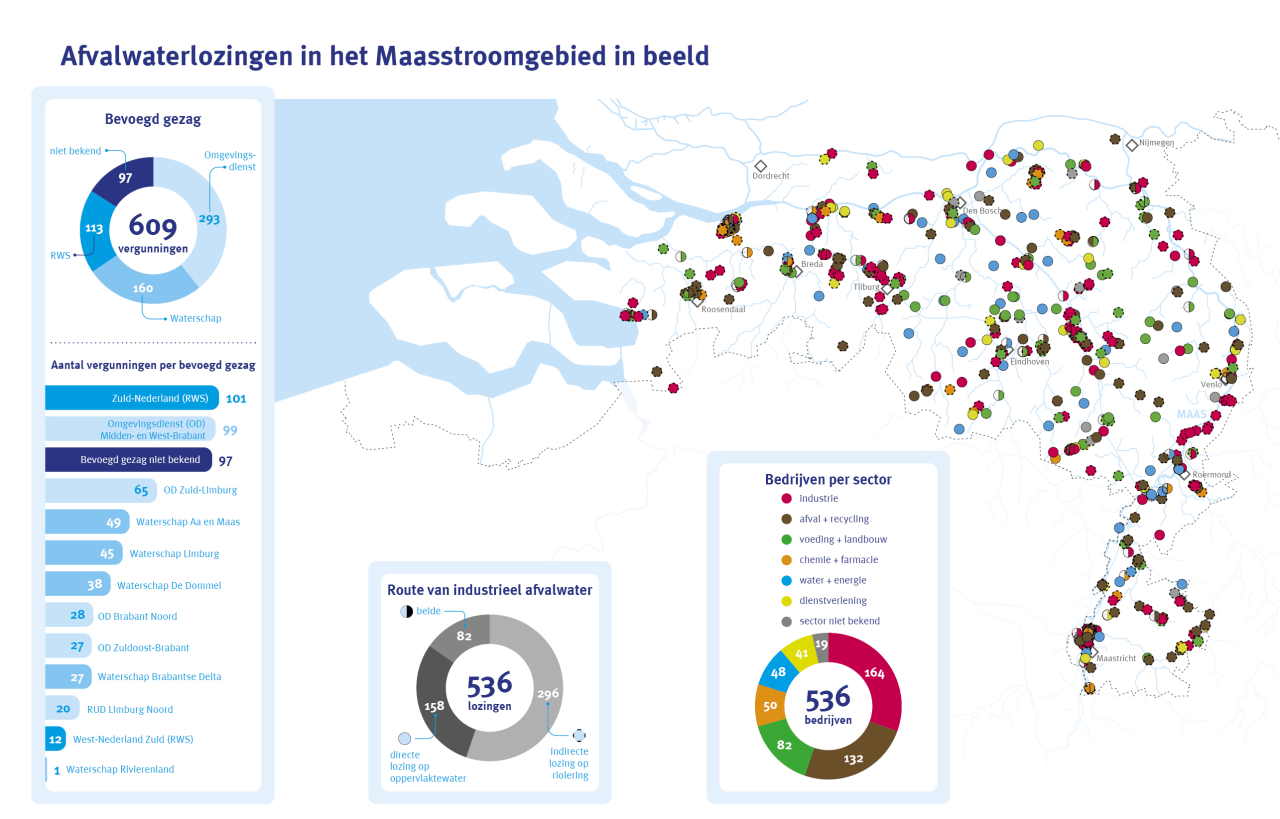
Meanwhile, various competent authorities issue discharge permits that are not aggregated and therefore do not take into account what the water and ecosystem can tolerate. Gaining a much clearer picture of the substances present in a discharge before issuing a permit is an absolute must, so that concrete reduction measures can be linked to it. RIWA-Maas, which represents the drinking water interests of the Meuse River, recently had a number of datasets combined, thereby identifying not only more than 600 companies with discharge permits but also no fewer than 10 competent authorities for a single watershed. Maarten van der Ploeg, director of RIWA Maas, explains: “This does not mean that all companies discharge PFAS, but it does prove that it is possible to map the extent of discharges. This provides a solid foundation for government agencies to build upon.”
Approach
“With this knowledge, we can begin to systematically monitor discharges in sectors known to use PFAS, such as manufacturing, waste management, and the chemical industry. According to RIWA Maas, the overview primarily shows that central government leadership—as the entity responsible for the system—is essential to ensure a consistent approach across all levels of government. This allows for a cumulative assessment per substance, enabling harmful substances such as PFAS to be detected more effectively. This not only helps reduce PFAS emissions in anticipation of a ban but also provides greater insight into the sources of these harmful substances. A river is a source of life—our life. That demands protection.”
About RIWA-Maas
RIWA-Maas represents the interests of drinking water companies in the Netherlands and Belgium that extract 450 billion liters of water annually from the Meuse River to produce drinking water for 7 million customers. They supply this water in and around Rotterdam, The Hague, Brussels, Antwerp, parts of Limburg and Zeeland, and West Flanders. The high quality standards that drinking water must meet require preventive protection of surface water.